

header with brand information and book pages
Review

✍🏻 Professor Romance’s Review: Karla Sorensen’s The Best Laid Plans ✍🏻

Overall Grade: A

Tropes/Elements: grump/sunshine; forced roommate/proximity; renovation romance; found family; slow burn; former pro football player

Karla Sorensen’s The Best Laid Plans begins like a lamb and ends with a lion’s roar. There is a quiet to this story even in the midst of the banter between her MMC, Burke, and her FMC, Charlotte, a back-and-forth that highlights their burgeoning attraction. It’s about what’s not being said in Sorensen’s newest story, the words and feelings that can’t seem to be spoken which captivates me. And I have so many words and thoughts about this book that I struggle to bring any structure to this review. Let me just go where I want to go, and I hope you follow it and grab this book fast.

Karla Sorensen has always been able to craft chemistry. She’s not an overtly erotic author. She infuses attraction and $ex into her books, but she doesn’t grant us full access to all the details of those scenes. Instead, she develops the relationships between her characters so much so that, oftentimes, at least recently, her MMC and FMC don’t consummate or give in to their attraction until late in the story. For this reader, this pacing is impeccable as it holds the reader in its thrall. I never get tired of the burgeoning relationship because every moment seems to matter for the future of her characters. Her ability to grab her readers quickly and keep them engaged throughout the story is her strength. This is definitely the case with Burke and Charlotte. And it is necessary for the depth and gravity of this book’s story.

Now, here’s where I might lose people but it can’t go without mention because, aside from Burke and Charlotte’s story, their fight against their attraction, their coming together, the falling apart, and their happily ever after, the true genius of Sorensen’s The Best Laid Plans is its exposition and interrogation of grief. Yes, she lays this at the feet of Burke. She fashions his grief to be palpable for her readers, and she shows the futility of language to process loss through his characterization. It’s brilliant. Having recently lost a very good friend, I understand Burke and his messy grief process. It’s complex and uncomfortable and forever incomplete, and Sorensen captures this well.

But here’s where her capacity as an author shines: the house, the one that Burke and Charlotte renovate throughout the book, is a representation of the gravity of loss. The juxtaposition of a house seemingly dead being raised to life with the fixed death of one of his favorite people is profound. It’s chilling how Sorensen crafts this. How do you live life without that person? Sorensen uses the house as a metaphor for dying. Then, in the specter of that house, she underscores the message about living other people’s dreams, both Burke’s father’s but also Chris’s dream. For much of this book, Burke doesn’t even know how to dream, so Sorensen gifts him one with the house. The depth of development in this analogy is brilliant and impactful and emotional. You cannot read this story and not feel the gravity of life. She even illustrates the multiple processes of grief through both Burke and Charlotte. It quite honestly left me spellbound.

Add to all of that some keen stylistic choices that excited this reader. Chapters Thirty-One and Thirty-Two are my two favorite chapters because Sorensen uses repetition in these chapters to feel like punches to the gut. As Burke and Charlotte struggle to handle the loss of their relationship, the repetition underscores it. The intentionality of these choices supports my contention that Karla Sorensen is an intelligent, intentional writer. And more people need to read her stories.

The Best Laid Plans has a flavor similar to Sorensen’s former stories but has its own voice. That voice is a reminder of the fragility of life. If you leave this book without hugging those you love a little tighter, you’ve missed the power of Karla Sorensen’s message and her provocative new story.

In love and romance,

Professor A

header with brand information and book pages
Review

✍🏻 Professor Romance’s Review: Lexi Blake’s Love The Way You Spy, book 1 of the Masters & Mercenaries New Recruits ✍🏻

Overall Grade: B

Tropes: next generation; insta-attraction; bdsm; romantic suspense; found family; grump/sunshine; forced proximity; fake relationship

Lexi Blake’s Love The Way You Spy is a much-anticipated read. If you’ve read her Masters and Mercenaries series (all iterations), you know this is the next generation of spies. I went into this book excited for Tasha Taggart and her love story. And I enjoyed the suspense of it, the curve balls that Lexi Blake loves to throw at her readers. For me, the suspense portion of the story was the most interesting, but I struggled with the love story. Honestly, I don’t think this is Lexi Blake’s fault…well maybe a little. The pacing is a bit slow. I didn’t need the constant reminders from Dare that he wouldn’t be able to have a future with Tasha even though she provided him comfort and a safe landing space for his feelings. Even though he feels seen by her, he “can’t have her.” Dare’s admonishments went a bit too far in this story.

Additionally, must Ian Taggart always save the day? I love him. Really I do. The found family trope of this story is the common thread of the Masters and Mercenaries universe. It’s one of the main reasons I continue to read these stories. And Love The Way You Spy is no different. The next generation, while struggling with fraught connections, has the comfort of the found family trope. The best part of Dare’s journey is his realization that he can be loved, not just by Tasha, but also by a broader group of people including Ian Taggart. But I’d love for Papa Taggart not to be the ultimate rescuer. I recognize the forthcoming characters are young, but I’m hoping there will be other former Masters and Mercenaries characters to guide this talented crew through their professional and personal journeys.

Overall, I liked Love The Way You Spy, but it was a slower read than I expected, and I found that to be disappointing.

In love and romance,

Professor A

header with brand information and book pages
new release, Review

✍🏻 Professor Romance’s Review: Rebecca Jenshak’s Tempting the Player ✍🏻

Overall Grade: A- / B+

Tropes: bodyguard romance; forbidden relationship; new adult romance; former celebrity; grump/sunshine

Rebecca Jenshak’s Tempting the Player is my favorite of her Campus Wallflowers series. I believe it has a lot to do with its ability to wrap up a beloved series while potentially launching a new one. Even more, Jenshak has drawn Jane and Hendrick in such a way that they grab your attention from the start of their story. I was obsessed with Hendrick’s want to protect Jane from an outside threat. His grumpy, closed-off exterior was unraveled with Jenshak’s deft pacing. His story is particularly heartfelt as he navigates re-entering his family after a time away, a situation fraught with angry feelings and worry over his leaving again. Jenshak uses Jane’s need for protection as the perfect catalyst for Hendrick’s reconciliation with his brothers.

Jane’s story arc is the foundation of Tempting the Player, as she must navigate an outside threat, the renewed attention of fans, and a hold on the normalcy of life she’s created since starting at Valley U. The suspense portion of Jenshak’s story is no surprise, even though Jenshak tries to put us off the trail with other characters. Even though I was able to figure out the person threatening Jane, Jenshak shows her skill as a seasoned romance writer in the navigation of Hendrick and Jane’s burgeoning forbidden relationship. Their chemistry and attraction are easy distractions in her story.

Lastly, I absolutely loved Hendrick’s brothers, and I’m hoping there are future stories for this motley crew of “lost boys” – there is no better term for them. Jenshak has crafted them in such a way that makes them intriguing, specifically his brothers, Knox and Archer. You’ll find me downloading these stories, if Rebecca Jenshak decides to write them.

Tempting the Player is a beautiful end to this series of female friends. Yes, it keeps us at Valley U longer, and it entwines itself with Jenshak’s beloved hockey and football teams. But this sweet sentence near the end of the book, “a few weeks later, four wallflowers gather in the living room of their off-campus house,” brought feelings of nostalgia and felt like an homage to the oft-mentioned Pride and Prejudice (from this series) and Little Women. There is nothing better to read than four friends who support and love each other through the ups and downs of falling in love.

In love and romance,

Professor A

header with brand information and book pages
new release, Review

✍🏻 Professor Romance’s Review: J. Saman’s Irresistibly Risky ✍🏻

Overall Grade: A- / B+

Tropes: ONS to more; surprise baby; doctor/patient; workplace romance; found family; pro football romance; hate to love; insta-love

J. Saman’s Irresitibly Risky feels lighter than its predecessors even though its themes lean towards the serious. Two words: Asher Reyes. Saman’s MMC brings light into the dark of its FMC’s life.  Asher’s ability to win Wynter’s love acts as the driving force of Saman’s book, and it’s slid into the top spot of her Irresistibly Yours series. To be fair, I suspect that my favorite story will be the forthcoming one, Irresistibly Dangerous, with a broody hero such as Lenox, but that isn’t the point of this review.

Instead, Saman has wielded her pen to create a story where her MMC falls instantly for his FMC and spends much of it chasing her. This is the dream of many a romance reader: a “golden retriever” of a man who falls hard and fast and uses his riches and influence to win her heart. Women want to be pursued and adored, and Saman grants that wish in Irresistibly Risky

What I loved about the journey of her characters is Wynter’s path. Like Wynter, my biological father left my life with many questions and few answers. The pain of that experience forever marks your soul, and Saman has captured this through the difficulty of Wynter accepting Asher’s interest in and love for her. The juxtaposition of Asher’s easy adoration for Wynter with Wynter’s inability to accept his love for her creates tension that breeds a rabid need for their happy ending. I loved sitting in their tension even though I wanted Wynter to give her heart to Asher easily. But that wouldn’t be true for someone such as Wynter who gave her heart to the first man in her life, and he obliterated it. It’s difficult to give it away again because that pain never leaves you. Saman captures Wynter’s internal struggle well, and even if you become frustrated by her willingness to run from Asher, you at least understand it well because Saman draws it with skill.

The ups and downs of Irresistibly Risky and the underlying story behind Wynter’s father drive the story forward. I found one moment in the story where Saman should have provided more of the story because a gap was created. She didn’t acknowledge that pocket of time, and I wanted her characters’ actions. That moment is the reason for my lower grade; however, Wynter and Asher’s chemistry and story arcs make up for it. The inclusion of Asher’s found family, Zax, Greyson, Callan, and Lenox, as well as their respective significant others, adds humor and wisdom to its main characters, providing a reminder of the power of their connection to the entire series. 

J. Saman’s style is simple: she creates characters who set the pages on fire and make us fall in love with them. Irresistibly Risky is a perfect example of this.

In love and romance,

Professor A

header with brand information and book pages
new release, Review

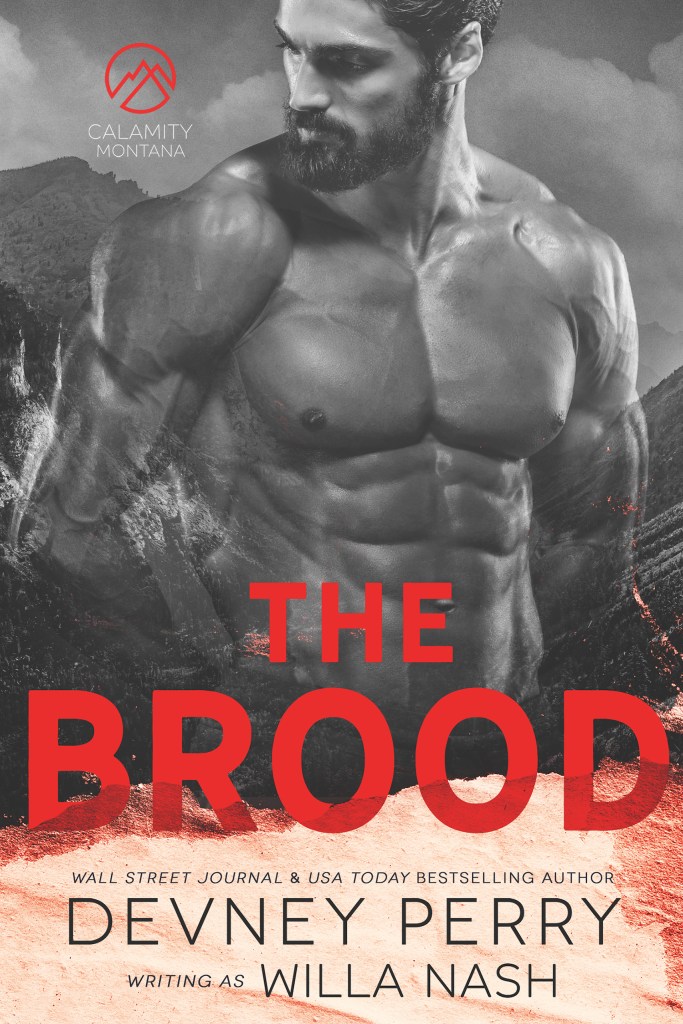
✍🏻 Professor Romance’s 4.5 ⭐️ Review: Devney Perry’s The Brood, a Calamity Montana romance ✍🏻

Overall Grade: 4.5 ⭐️

Tropes: grump/sunshine; loner MMC; small town romance; traveling FMC; forced proximity; age gap; best friend’s little sister

“If there was a woman who could will me to love her until my dying day, it was Iris.”

The Brood by Devney Perry is a captivating addition to the Calamity Montana series, featuring the enthralling romance between Wilder and Iris. Perry masterfully weaves the grumpy/sunshine trope into their story, creating a dynamic that is both heartwarming and electrifying.

One of the central themes of the novel revolves around the idea of finding one’s home in the heart of another. Wilder and Iris, two seemingly opposite souls, discover a profound connection that transcends their initial differences. The journey they embark on, as they learn to understand and cherish each other, is beautifully portrayed. Perry’s ability to convey the depth of their emotional bond is truly commendable.

Another poignant theme is the notion of self-forgiveness and moving forward. Both Wilder and Iris carry burdens from their pasts, and their struggle to come to terms with them is depicted with a raw and touching authenticity. The narrative explores the complexities of letting go, learning to forgive oneself, and embracing the possibility of a brighter future.

Unlike previous installments in the Calamity Montana series, Perry intentionally pulls back from incorporating the other characters, emphasizing Wilder’s solitary life before meeting Iris. This choice serves to underscore the profound impact Iris has on Wilder’s world, highlighting the transformative power of their love.

The emotional depth of The Brood is further heightened by Perry’s easy prose. The author has a knack for delving into the hearts and minds of her characters, allowing readers to feel every joy, every pain, and every moment of vulnerability. The intimate scenes between Wilder and Iris are charged with palpable chemistry, adding a steamy layer to their already intense connection.

Devney Perry’s ability to infuse a tale with such heartfelt emotion is a testament to her storytelling prowess. For fans of the grumpy/sunshine trope, this novel is an absolute must-read. The themes of finding a home in another and the power of self-forgiveness resonate long after the final page is turned. The Brood is a testament to the enduring magic of love and the capacity for redemption within us all.

In love and romance,

Professor A

header with brand information and book pages
new release, Review

✍🏻 Professor Romance’s 4 ⭐️ Review: Louise Bay’s Dr. CEO, another romance in The Doctors series ✍🏻

Overall Grade: ⭐️ ⭐️ ⭐️ ⭐️

Tropes: billionaire MMC; grump/sunshine; small town romance; one night stand; hate to love; found family; opposites attract

Have you ever been afraid of change? Have you needed the promise of stability to keep you going? If you’ve answered “yes” to either question, then you recognize the plight of Louise Bay’s FMC in her newest book, Dr. CEO, the next book in her The Doctors series. Kate has lived at Crompton Estate for a large portion of her life. It’s the place where she is happy and secure after a childhood of insecurity at the hands of her mother. When Vincent, Bay’s MMC, shows up, that security is threatened by his purchasing of the estate. All she knows changes, but most importantly, she falls for the guy changing Crompton Estate which adds a complication. Vincent and Kate’s story highlights the power of the mind influenced by trauma. For Vincent, it’s an absentee father; for Kate, it’s a mother who lived a fluid life before her early death. Bay creates an instant attraction, one-night stand scenario to grow Kate and Vincent’s attraction. She then complicates it with his playboy, transitory ways and her need to stay at Crompton Estate. As each of them is challenged by the other, they transcend hate-to-love vibes and grump/sunshine and fall for each other, even though Vincent fails to acknowledge it. 

It’s the falling action of Dr. CEO where Bay lost me a bit. Vincent’s resolution to his absence from Kate feels rushed. The inconsistency in character doesn’t feel organic to the story, and I struggled with the ending. Even more, there were times when I didn’t believe Kate and Vincent’s chemistry. There is attraction between them, but there is something missing from their romantic journey. 

Thankfully, Vincent and Kate find their happy ending, and it adds another happy couple to the Doctors series. I believe there is one story to go for each of the family members to find their HEAs. 

In love and romance,

Professor A

header with brand information and book pages
new release, Review

✍🏻 Professor Romance’s 4.5 ⭐️ Review: Roxie Noir’s The Two Week Roommate, a Wildwood Society story ✍🏻

Overall Grade: 4.5 ⭐️

Tropes: friends to lovers; second chance romance; small town romance; forced proximity/one bed trope; childhood friends

“You would take us places and I’d get us home safe. None of it ever felt like a burden. It just felt like…us.”

A week later and Roxie Noir’s The Two Week Roommate still resides in my head. Like some of her contemporaries, Noir has taken the space to add depth to the romance genre. How you might say? In her newest book, her thematic choices elevate the simplicity of the romance genre. With her newest book, Noir highlights the complexity of relationships, underscoring the fraught nature of her main characters’s journey. The influence of Gideon’s upbringing tears them apart in their youth and leaves Gideon with a hole in his heart, only filled when he reconnects with Andi. His penance and guilt challenge Andi to forgive him for choices made in the inexperience of his youth. Maturity, the personal journeys of his siblings, and military service have opened his world and his mind, and his need to let go of his past to find his future with Andi is the most compelling part of their story. Andi’s willingness to help him process the final bits of his guilt while falling in love with him adds heart to this book. I lost myself in The Two Week Roommate. Roxie Noir doesn’t need to add much tension to Gideon and Andi’s relationship, given that their environment is stressful enough. Instead, acceptance is the ultimate message, backed up by keeping Gideon and Andi together even through difficult times. That’s the promise of this newest book from Roxie Noir. She has drawn a socially responsible and beautiful romance between Andi and Gideon that steals a bit of your heart and leaves you questioning your perceptions of others.

In love and romance,

Professor A

header with brand information and book pages
new release, Review

✍🏻 Professor Romance’s 4.5 ⭐️ Review: Nikki Sloane’s The Good Girl ✍🏻

Overall Grade: 4.5 ⭐️

Tropes: brother’s best friend; best friend’s little sister; virgin heroine; prolific hero; series of interconnected standalones

“He wasn’t wrong. I was a good girl, but sometimes, especially when I thought about him, all I wanted was to be bad.”

And that, my friends, is the crux of Nikki Sloane’s deliciously steamy The Good Girl, another story in her Nashville Neighborhood world. Preston and Sydney (Preston of The Doctor and Sydney who is the little sister of The Frat Boy’s Colin) remind us what we love most about Nikki Sloane’s brand of romance: it’s pure spice. This story is an insta-attraction between her main characters. Sloane deftly weaves Preston and Sydney’s forbidden journey with themes about overwhelming parental expectations and the danger of falling in love (or lust) with your best friend’s little sister, lending more gravity to her story beyond just smutty romance. Preston’s journey into maturity redeems him from his role in Sloane’s The Doctor, and you can’t help but fall in love with him as he negotiates his intense attraction to Sydney while starting a business with her brother. If I have any criticism, it’s the forbidden nature of their relationship. This has nothing to do with Nikki Sloane’s ability to write romances. Her easy prose and the pacing of the characters’ progressions make for an unputdownable read. However, I’m weary of the protective older brother trope. I’m not a fan of a big brother having a “say” over his little sister’s choices. I’ll fight against this as long as I can, hoping that authors will allow little sister’s agency and autonomy.

If you’re looking for a quick bit of romance, one that will satiate your erotic hunger, Nikki Sloane’s The Good Girl is the perfect read.

In love and romance,

Professor A

header with brand information and book pages
new release, Review

✍🏻 Professor Romance’s 4 ⭐️ Review: Penelope Ward’s I Could Never ✍🏻

Overall Grade: ⭐️ ⭐️ ⭐️ ⭐️

Tropes: hate to love; enemies to lovers; forced proximity; forbidden romance; dead fiance’s best friend; found family; small town romance

Penelope Ward’s newest romance, I Could Never, is the emotional juggernaut of a story that you expect from her. Her characters, Carly and Josh, put her readers through the paces as they navigate the minefields of a forbidden relationship as Carly is the fiancee of Josh’s now-dead best friend. Ward weaves hate to love with forced proximity and forbidden romance while also falling into a trope of found family as Carly and Josh are left to care for Scottie, the orphaned brother of Carly’s dead fiance, Brad. All of this culminates in a story that tears at your heart and makes you yearn deeply for Carly and Josh’s future. 

A highlight of I Could Never is the dialogue and banter between the main characters, Josh and Carly. What begins with the spirited banter between the two who begin with attraction but also disdain flows into an emotional, tortured dialogue as they fight that attraction out of a sense of obligation to Brad. Ward is careful to dole the tension of her story out through their interactions, and it’s pure torture for most of the story. That is the compelling force throughout the book. 

A second highlight is Ward’s creation of their chemistry. While they begin with a hate-to-love vibe given some actions of the past, it’s clear from almost the beginning that they are fated for each other. Unfortunately, Ward complicates it with a forbidden element. She edges her readers as they hold out even though they are ready to burst with their attraction. Again, it’s another compelling force behind her book.

Another important highlight is the found family trope created by Carly and Josh’s care for Scottie, the dead fiance’s orphaned brother. Ward creates a charm in their care for Scottie who is non-verbal autistic. From Scottie’s obsession with Josh’s smell to Carly and Josh’s compassion for Scottie, Ward’s readers are charmed into loving this trio. When she complicates their world through a series of actions, Ward builds a different tension level into her story, drawing her readers through the book. As I see it, the ending of I Could Never is the only way forward, and it’s my favorite part of the book. 

My biggest criticism of Ward’s book is the balance between Carly and Josh’s chemistry and their guilt over it. For me, it felt overwrought and unnecessary. Don’t get me wrong. I understand it, but it wasn’t necessary for it to exist for much of the book. I believe it could have ended sooner, and she might have complicated Carly and Josh’s relationship in other ways.

That aside, Penelope Ward’s I Could Never is special. It highlights the love for people living with special needs and the necessary depth of care for them. The story is spicy and romantic, but it feels like the last important part of this story. 

In love and romance,

Professor A

header with brand information and book pages
new release, Review

✍🏻 Professor Romance’s 4 ⭐️ Review: Winter Renshaw’s Hate Mail, book 1 of Papercuts ✍🏻

Overall Grade: ⭐️ ⭐️ ⭐️ ⭐️

Tropes: arranged marriage; hate to love; side of romantic suspense; grump/sunshine

Winter Renshaw’s gold lies in the way she crafts her MMCs. There is a common thread to them: alpha in nature, closed off, and stubborn. It takes the tenacity of the FMC to blow through their tremendous emotional walls. Over and over again, Renshaw makes us fall in love with this character construction, no matter the plot points. This is also the case in her newest story, Hate Mail. Slade and Campbell’s parents are life-long friends who decide early in their children’s lives to arrange a marriage, effectively joining their powerful families. Their parents also encourage them early on to become pen pals, and it becomes clear from the start that the two don’t want what their parents have decided. 

The first half of Renshaw’s Hate Mail is compelling. Slade is Renshaw’s typical hero, and while Campbell hopes to forgo the arranged marriage, she strives to understand and connect with Slade, who makes that task almost impossible. This first half, their strife and Campbell’s pain, is where the angst of her story resides and where she pulls her reader into Hate Notes. 

Unfortunately, the second half falls apart a bit. For one, Slade spends two-thirds of the story pushing Campbell away, and he makes a sudden 180 with very little provocation. His acceptance of Campbell comes too easily given the strife of the first portion of Renshaw’s book. It feels like “a miss” of sorts. Secondly, there are two situations that arise for Slade in the story, one resolves too easily and the second feels thrown into the story. Had I read a draft of Hate Mail, I would recommend removing the second and developing the emotional turmoil of the first so we can better empathize with Slade. 

The ending for Slade and Campbell in Hate Mail is sweet, and they earn their happy ending. It’s the latter third of this book that simply needed a bit more work, save for the epilogues.

In love and romance,


Professor A