

new release, Review

✍🏻 Professor Romance’s Reviews: Rebecca Jenshak’s Spotlight, book 4 of her Holland Brothers series ✍🏻

An illustration depicting two characters on a baseball field; a young man in a baseball uniform and a young woman holding a baseball bat, both smiling in a playful stance. The background features a stadium with lights and a sunset sky, and the title 'SPOTLIGHT' prominently displayed at the top.

Overall Grade: B

Tropes: single mom; pro baseball MMC; close proximity; he falls first; found family; bookish FMC

Rebecca Jenshak’s Spotlight, the fourth installment in her Holland Brothers series, presents readers with an emotionally engaging contemporary romance that balances predictable genre elements with meaningful character development. As an examination of second chances and the complexities of balancing personal dreams with familial responsibilities, the novel succeeds in delivering an accessible yet thoughtful narrative.

The plot centers on Olivia, a single mother who has resigned herself to a life without romantic partnership after numerous disappointments mainly attributed to her parental status. During a weekend getaway in New York, she encounters Flynn Holland, occupying the adjacent hotel room. Their connection is immediate and profound, culminating in a night of intimate conversation rather than physical passion. This approach offers a refreshing deviation from genre conventions wherein the MMC and FMC mix “business with pleasure.” The following morning, Olivia awakens alone and assumes abandonment, unaware that Flynn was urgently called away by his agent regarding negotiations with a major league baseball team. Upon his return, he discovers Olivia has departed, seemingly ending their brief encounter.

Months later, fate intervenes when they discover their social circles are interconnected. Olivia is the best friend of Flynn’s brother Archer’s fiancée. Flynn, having recently joined the struggling local MLB team, the Mustangs, as their rising star, pursues Olivia with determination. The narrative tension centers not on miscommunication or contrived obstacles, but on a genuine career dilemma: when Flynn receives an offer from his dream team, he must choose between professional aspiration and the newfound family connection he has established with Olivia and her daughter.

Jenshak demonstrates particular skill in character development through supporting figures. The presence of Olivia’s family, Gigi, Grandpa Earl, and Ruby, provides emotional scaffolding for her character while Earl simultaneously serves as a mentor figure for Flynn. This dual functionality in secondary characters reveals Jenshak’s narrative efficiency. Similarly, the inclusion of Flynn’s brothers from previous novels creates a sense of continuity within the series while enhancing the protagonist’s characterization.

The novel’s most compelling emotional sequence involves Flynn’s confrontation with his estranged father. Here, Jenshak elevates the narrative beyond typical romance conventions, integrating themes of generational trauma and the courage required to establish healthy boundaries. This scene exemplifies the author’s ability to weave multiple tonal elements into a cohesive whole.

Stylistically, Spotlight is accessible without sacrificing substance. Jenshak’s prose is direct and unpretentious, prioritizing narrative momentum over linguistic ornamentation. The novel never attempts to transcend its genre. Instead, it excels within established parameters, offering readers exactly what the contemporary romance format promises: emotional satisfaction, relatable conflicts, and an assured resolution.

While Spotlight does not revolutionize the romance genre, its straightforward approach to storytelling, combined with thoughtful character development and thematic exploration of family dynamics, results in a thoroughly enjoyable reading experience. The novel’s greatest strength lies in its authenticity, both in its portrayal of single motherhood and in its examination of how 

Spotlight represents a solid addition to Jenshak’s bibliography, demonstrating her consistent ability to craft emotionally resonant contemporary romance. Though it adheres closely to genre conventions without significant innovation, the novel’s well-developed characters and meaningful exploration of family relationships elevate it above many similar offerings in the contemporary romance landscape.

In love and romance,

Professor A
new release, Review

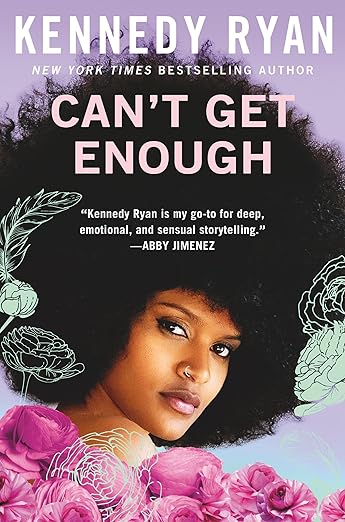
✍🏻 Professor Romance’s Reviews: Kennedy Ryan’s Can’t Get Enough, the final book of her Skyland series – a top read for 2025 ✍🏻

Book cover of 'Can't Get Enough' by Kennedy Ryan featuring a close-up of a woman with curly hair, surrounded by floral designs and promotional text praising the author.

Overall Grade: A

Recently, on social media, there have been readers who have spoken ‘from their chests’ that books shouldn’t be political. However, if you dive into a Kennedy Ryan story, you can’t help but understand the importance of highlighting social issues so that readers can learn and understand diverse cultures. To read a Kennedy Ryan book is a political act, and I am here only to amplify her voice and experience so more people can understand the challenges for people of color, ones that are universal as well as unique. Can’t Get Enough is a reminder that Kennedy Ryan is a tour de force in the romance book community and should be required reading in any college classroom.

Universal Challenges Through a Distinct Lens
Kennedy Ryan writes characters whose experiences might be distinctly different, but Ryan shows through the experiences of her main characters, Hendrix and Maverick, that life challenges don’t care about differences. Ryan has written the challenges of living with a relative with Alzheimer’s with extraordinary sensitivity and authenticity. The portrayal creates an emotional resonance that transcends any demographic boundaries, serving as a mirror to anyone who shares this difficult lived experience.

One of the most viscerally emotional moments in the book happens in Chapter 52, as Ryan treats us to the profundity of her writing, writing that acts as a reminder of her exceptional talent. Consider yourself forewarned: have a tissue box within arm’s reach for that chapter (and the one after it).

Hendrix has been one of my favorite characters throughout this series because I see aspects of myself reflected in her: strong, independent, and emotionally solid. Characters like Hendrix showcase the complexities of cultivating genuine intimacy, particularly when that requires a level of trust with individuals who have, historically, been disappointing. In the first two books of this series, Hendrix stands as the stalwart woman, dispensing wisdom to her best friends as they navigate their emotional labyrinths.

Yet Ryan brilliantly illuminates how life weighs heavily on the shoulders of those who serve as pillars for others. While maintaining a nuanced portrayal of Hendrix’s experience as a woman of color—bearing burdens unique to that identity—Ryan also develops Maverick into a partner truly deserving of Hendrix’s formidable strength. Their partnership emerges as one of the book’s most compelling elements, demonstrating Ryan’s gift for creating relationships that feel both aspirational and authentic.

The Politics of Representation
This novel possesses remarkable depth and substance. Kennedy Ryan confronts us with the shared experiences of people of color, gently but firmly compelling readers to consider the challenges faced by marginalized communities. She infuses her narrative with representations of Black excellence through the achievements and ambitions of Hendrix, Maverick, and other characters.

Here lies the critical juncture where readers from different backgrounds have the opportunity to “listen,” learn, and ultimately advocate for people of color. This is precisely where incorporating social issues becomes not merely appropriate but necessary—a political action essential for meaningful change. In this space, Kennedy Ryan truly shines, distinguishing herself from contemporaries in the romance genre through her willingness to engage with difficult realities while still delivering the emotional satisfaction readers seek.

Prose That Transcends
Another element that sets Kennedy Ryan apart is her extraordinary facility with language. I found myself highlighting passages on nearly every page, captivated by her ability to weave words and phrases into sentences of remarkable beauty and power. Within these exquisitely crafted sentences reside a spectrum of emotions and insights designed to challenge our intellects and evoke profound emotional responses.

Ryan’s passion for writing manifests itself on every page, creating the ultimate connection with her readers. Her prose doesn’t merely tell a story—it creates an experience that lingers long after the final page.

A Fitting Conclusion
Can’t Get Enough brings Kennedy Ryan’s Skyland series to a beautiful conclusion. This series serves as a poignant reminder of the work still to be done in our society, while simultaneously celebrating the beauty of cultures that might differ from our own. Kennedy Ryan continues to challenge us intellectually and emotionally, all while showcasing her remarkable literary talents.

For readers seeking romance with substance, depth, and purpose—romance that entertains while also expanding our understanding of experiences beyond our own—Can’t Get Enough stands as an essential text, further cementing Kennedy Ryan’s place as one of the genre’s most important and gifted voices.

In love and romance,

Professor A

new release, Review

✍🏻 Professor Romance’s Reviews: Jessica Peterson’s Sawyer, book 3 of the Lucky River Ranch series ✍🏻

Book cover of 'Sawyer' by Jessica Peterson featuring a man in a cowboy hat, denim shirt, and bandana against a vibrant pink background.

Overall Grade: A

Tropes: single dad MMC; single mom FMC; one night stand to more; small town romance; “who did this to you”

In the third installment of Jessica Peterson’s Lucky River Ranch series, Sawyer presents a refreshingly uncomplicated romance that thrives on genuine connection rather than manufactured conflict. Unlike its predecessors, Cash and Wyatt, this novel offers a narrative where the central strife between characters remains delightfully low, allowing readers to immerse themselves in the authentic development of a relationship built on mutual respect and understanding.

The story begins with a chemistry-fueled one-night stand between Ava, a divorcée emerging from a relationship with a man who failed to be a true partner, and Sawyer Rivers, the most responsible of the Rivers siblings. What elevates this narrative beyond the typical romance framework is Peterson’s thoughtful exploration of partnership. The central tension revolves around Ava’s gradual realization that Sawyer represents everything her previous relationship lacked—an active participant who acknowledges and uplifts her without expecting more than he is willing to offer. For Sawyer, the journey involves releasing his grip on traditional relationship labels and allowing someone to care for him after a lifetime of caring for others. Their mutual acceptance of these realizations unfolds with a natural ease that feels both satisfying and earned.

Peterson’s choice to pair a single father with a single mother creates immediate common ground, reinforcing the partnership theme that runs throughout the novel. Their shared understanding of parenthood’s challenges establishes an underlying connection that makes their growing bond all the more believable. This dynamic provides fertile ground for exploring how genuine partnership can heal the wounds left by previous relationships where balance and reciprocity were absent.

Sawyer himself emerges as perhaps the most compelling Rivers brother yet. Through his character, Peterson thoughtfully interrogates the concept of “weaponized incompetence” by presenting its antithesis—a man almost excessively capable who requires another’s perspective to recognize his own need for support. His solidity never translates to tedium, particularly as Peterson skillfully balances his caretaking public persona with his confidently dominant private one. This multidimensional characterization creates a romantic lead who feels both aspirational and authentically human.

The true magic of the Lucky River Ranch series continues to be the rich tapestry of relationships that extend beyond the central romance. The brotherhood among the Rivers men, their connections to their partners, and their integration into the broader Hartsville community create an immersive small-town experience that enhances the romantic narrative. Peterson demonstrates a nuanced understanding of how community shapes individuals and relationships, illustrating the truth behind the adage that “it takes a village” through the warmth and complexity of these interconnected relationships.

Sawyer stands as a testament to Peterson’s ability to craft romances that feel both emotionally satisfying and refreshingly grounded in reality. For readers who appreciate small-town settings, authentic character growth, and relationships built on genuine partnership rather than dramatic conflict, this third installment in the Lucky River Ranch series delivers a compelling and heartwarming reading experience that leaves one eagerly anticipating the remaining stories—particularly Duke’s forthcoming tale.

In love and romance,

Professor A
new release, Review

✍🏻 Professor Romance’s Reviews: L.B. Dunbar’s Catch the Kiss, book 2 of the Chicago Anchors series ✍🏻

Cover art for 'Catch the Kiss' by L.B. Dunbar, featuring a professional baseball player kneeling with a rose, proposing to a woman in a red dress, set against an elegant background.

Overall Grade: B

Tropes: second chance romance; marriage of convenience; pro baseball MMC; single dad; forced proximity; insta-attraction

In the second installment of L.B. Dunbar’s Chicago Anchors series, Catch the Kiss delivers a compelling second-chance romance between Ruthie and professional baseball player Bolan. Set against the backdrop of Chicago’s vibrant sports scene, their story unfolds a decade after their initial meeting, offering readers a satisfying exploration of growth, redemption, and unexpected love.

The novel opens with an ingenious meet-cute that immediately captivates, despite its questionable premise as a legitimate psychological study. This creative introduction establishes the foundation for Dunbar’s narrative with remarkable efficiency, setting up the characters’ initial connection in a way that feels both unique and memorable. When their paths cross again years later, the groundwork for their second chance is already firmly established in readers’ minds.

Bolan’s character arc stands as one of the novel’s greatest strengths. His transformation from playboy athlete to devoted husband unfolds with a charm that makes him increasingly endearing as the story progresses. What proves particularly compelling is that Bolan falls first, dedicating himself completely to making their marriage of convenience succeed. His commitment to Ruthie and his daughter showcases a depth of character that transcends the typical sports romance hero.

Equally engaging is Ruthie’s journey, which mirrors the familiar struggles many women face after early marriage failures—the challenge of reclaiming one’s identity and purpose. Through Bolan’s genuine interest and eventual love, she discovers her own space as a mother to his daughter, finding both her voice against manipulative in-laws and her path to profound happiness. Her evolution feels authentic and emotionally resonant, offering readers a protagonist whose growth is as satisfying as the romance itself.

While Dunbar’s storytelling shines in character development and emotional depth, her reliance on an obvious baseball metaphor throughout the narrative occasionally feels heavy-handed and unnecessary. This running motif, while thematically relevant, sometimes detracts from the natural power of Ruthie and Bolan’s story. This tendency toward overly explicit metaphorical frameworks appears to be a recurring element in Dunbar’s writing style.

Despite this minor critique, Catch the Kiss succeeds in creating engaging, relatable characters whose second-chance journey proves both heartwarming and satisfying. Dunbar’s Chicago Anchors series continues to demonstrate her talent for crafting contemporary romances with emotional substance and authentic character growth. Readers will undoubtedly look forward to future installments featuring the compelling personalities introduced in this Chicago-based world.

In love and romance, 

Professor A

new release, Review

✍🏻 Professor Romance’s Reviews: Kristen Ashley’s The Woman Left Behind ✍🏻

Book cover of 'The Woman Left Behind' by Kristen Ashley, featuring colorful abstract designs with water droplets.

Dear Kristen Ashley,

Recently, I turned the final page of The Woman Left Behind, the fourth installment in your Misted Pines series, and I found myself contemplating the rare gift you’ve given your readers in this latest work. While I’ve long admired your ability to craft engaging romantic suspense as well as other varied genres, this particular novel resonates in ways that feel especially meaningful in our current times.

What strikes me most profoundly about this story is how you’ve created a sanctuary within its pages. As Harry and Lillian navigate their difficult journey — first searching for her parents and then confronting the devastating reality of their absence — you offer readers a respite from our own chaotic world. Their romance grounds us, allowing us to find solace in their connection while everything around them spirals into uncertainty. In a time when many of us seek refuge from a relentless news cycle that feels overwhelming at best, traumatizing at worst, you’ve masterfully constructed a narrative that acknowledges hardship while still providing emotional shelter.

In Harry Moran, you’ve crafted the steadfast partner we all wish to have by our side. His unwavering support as Lillian’s rock—the way he truly “sees” her pain and actively seeks to both comfort and resolve it—makes him the epitome of what a romantic lead should be. His responsibility and groundedness, his complete absence of “weaponized incompetence,” creates a character who embodies the reliable partnership so many yearn for in real life. Harry stands as a testament to your understanding of what readers need from their literary companions.

The suspense elements propel your narrative forward with remarkable momentum. Each unexpected twist keeps readers perched on the edge of anticipation, even when aspects of the plot seem telegraphed ahead. I find myself questioning why anyone would choose to make their home in Misted Pines given the extraordinary events of the first four books—yet paradoxically, I’m left wanting more. The stories of Jace and Jesse, at minimum, feel essential to complete this rich tapestry you’ve woven.

Your storytelling continues to serve a complete emotional feast. There is such abundant narrative within these pages that readers begin with voracious curiosity and conclude utterly satisfied by your careful, intentional navigation through the story. Perhaps most beautiful is how you’ve crafted Lillian’s found family—these relationships, built in the absence of her remarkable parents, allow us to feel the gravity of their loss through the care and love that surrounds her. The emotional weight of this dynamic represents the true heart of this work.

The Woman Left Behind delivers precisely what readers seek in romantic suspense—the growing love between Harry and Lillian provides an emotional anchor while the mystery unfolds around them. You’ve once again demonstrated why your work resonates so deeply with so many. Thank you for creating stories that offer both escape and emotional truth in equal measure.

In love and romance,

Professor A

new release, Review

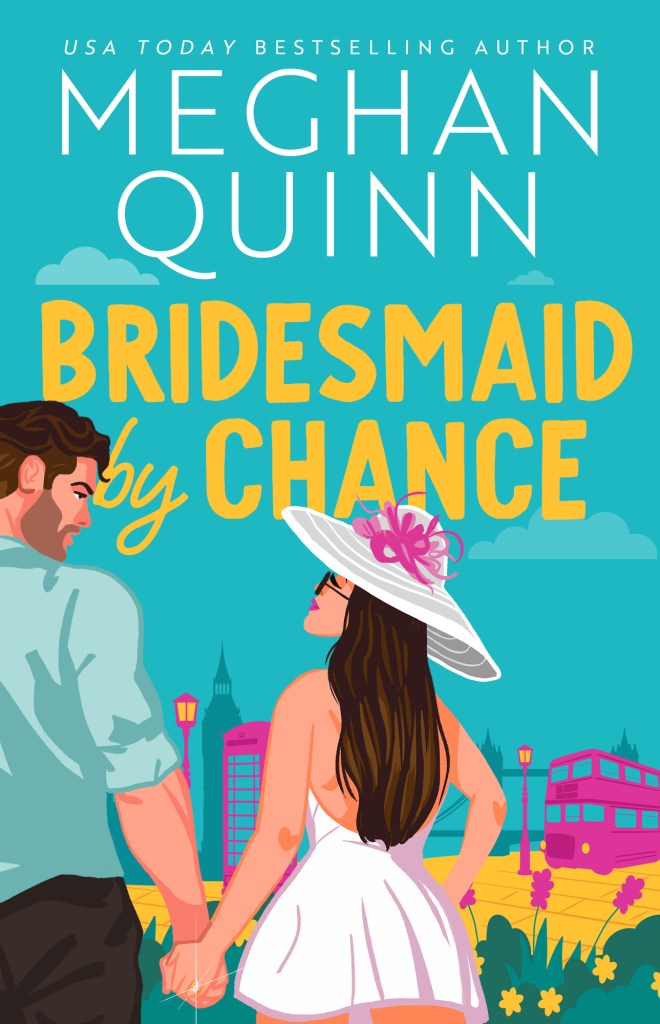
✍🏻 Professor Romance’s Reviews: Meghan Quinn’s Bridesmaid by Chance ✍🏻

Overall Grade: A-

Tropes: age gap; workplace romance; brother’s business partner; insta-attraction; forced proximity

In the final installment of Meghan Quinn’s Bridesmaid series, Bridesmaid by Chance, delivers a satisfying conclusion through the forbidden romance between Sloane and Hudson. Their chemistry—electric and complicated—drives a narrative that explores both personal growth and the delicate balance between family obligations and individual happiness.

The central relationship between Sloane and Hudson captivates from the first page. Their connection is forbidden on multiple levels—he’s her boss and her brother’s business partner—creating a tension that Quinn masterfully navigates. What makes this dynamic particularly compelling is the contrast between Sloane’s confident ownership of her sensuality and Hudson’s honorable resistance to his growing attraction to her. This push-and-pull creates moments that are both humorous and profoundly emotional.

Quinn weaves a narrative filled with complications that feel both authentic and engaging. When Hudson needs to appease a prospective partnership by volunteering Sloane as a stand-in bridesmaid, their professional relationship begins to blur. Their attraction eventually boils over, leading to a relationship that faces multiple obstacles: Hudson’s sense of obligation that temporarily drives him away from Sloane, her brother’s discovery of their relationship, and the eventual reconciliation that demonstrates significant character growth for all involved. Hudson’s realization of Sloane’s importance and her brother Jude’s acceptance of her autonomy create a satisfying emotional payoff.

The individual character arcs prove as compelling as the romance itself. Hudson, the perpetually responsible Hopper sibling who has sacrificed personal happiness for duty, finds himself transformed by Sloane’s influence as she teaches him to embrace life beyond his obligations. Meanwhile, Sloane battles perceptions about her age, underscored by the gap between her and Hudson, and fights for recognition of her emotional maturity. Her history—growing up in poverty and losing her parents—has forced an adulthood on her that others are slow to acknowledge. When she finally stands up to her brother and earns his respect, the moment resonates as a triumphant fulfillment of her character journey.

The appearance of characters from previous books adds both humor and emotional weight to the narrative, creating a sense of community that enriches the reading experience. The intimate scenes between Hudson and Sloane strike an effective balance—passionate without overshadowing the emotional core of their relationship. Quinn’s signature humor permeates the story, providing levity amid the more serious emotional developments.

Bridesmaid by Chance stands as the strongest entry in Quinn’s series, delivering the perfect blend of chemistry, character growth, and emotional resolution that romance readers crave. For those who have followed the series from the beginning, this conclusion offers a deeply satisfying payoff, while newcomers will find themselves immediately drawn into Quinn’s world of complex relationships and genuine emotion.

In love and romance,

Professor A

new release, Review

✍🏻 Professor Romance’s Reviews: Kandi Steiner’s Save Your Breath, book 4 of her Kings of the Ice series ✍🏻

Overall Grade: A-

Tropes: childhood friends to lovers; opposites attract; fake relationship/engagement; forced proximity; pro hockey romance; miscommunication trope; athlete & pop star; slow burn

Two elements elevate romance novels to greatness: a hero who can tenderly braid the heroine’s hair and characters whose painful pasts prevent them from finding happiness until their love interest truly sees them. Kandi Steiner masterfully incorporates both in Save Your Breath, the fourth installment in her Kings of the Ice series, creating an emotional journey that devastated me in the best possible way.

I anticipated that Aleks Suter and Mia Love’s story would pack the most potent emotional punch in this series. While I remain a devoted “Daddy P” fan, Aleks now rivals him as my favorite Steiner book boyfriend. Unlike Daddy P’s brooding grumpiness, Aleks embodies the team’s “bad boy” persona—yet his anger-fueled actions mask the deep wounds of a man abandoned to foster care. Steiner’s character development for Aleks stands as the novel’s greatest achievement. His journey toward self-acceptance through Mia’s unconditional love brought me to tears, and Steiner makes readers work for this payoff through an exquisitely crafted slow-burn romance.

Mia serves as Aleks’s perfect counterbalance. Beyond the “good girl/bad boy” dynamic, Steiner portrays her as someone who complements and challenges Aleks. Through Mia, we witness the struggle to maintain cultural relevance while staying true to artistic integrity. Aleks becomes her biggest supporter, encouraging her to create authentic music even as they navigate their arranged engagement. This mutual admiration adds profound vulnerability to their supposedly fake relationship—they’re each other’s greatest champions, fostering a love that captivates readers.

The Tampa Bay Ospreys’ found family dynamic enhances the emotional resonance. Aleks’s gradual connections with teammates parallel his growing closeness with Mia, creating a powerful emotional compound effect when he finally accepts that he deserves love. While these interactions often inject humor into tense moments, they underscore Aleks’s deep-seated need for acceptance. His relationships with Mia’s parents and his elderly neighbor further highlight his character growth, adding emotional complexity to the story.

My one criticism lies in the miscommunication between the protagonists. While Steiner establishes their ability to see each other fully, their failure to recognize each other’s feelings sometimes lacks credibility. The narrative doesn’t sufficiently explore why these otherwise perceptive characters remain blind to their mutual attraction.

Nevertheless, this flaw doesn’t diminish the overall emotional impact of Save Your Breath. Readers should prepare for a slow burn that demands patience—Steiner doesn’t rush Aleks and Mia’s journey. The beautiful, tear-inducing conclusion justifies the wait. The Kings of the Ice series continues to deliver exceptional hockey romance, and I eagerly anticipate the next two installments.

In love and romance,

Professor A

new release, Review

✍🏻 Professor Romance’s Reviews: Helena Hunting’s If You Love Me, book 4 of her Toronto Terrors series ✍🏻

Overall Grade: A-

Tropes: second chance; forbidden romance; close proximity; sports romance; workplace romance; age gap; hockey romance; found family

Helena Hunting’s latest Toronto Terrors installment, If You Love Me, delivers a refreshing take on hockey romance that will delight fans of the series. Roman emerges as a surprising and complex male lead. Readers who met him as the protective father in If You Need Me will be delighted by his transformation into an unexpectedly dominant romantic partner. Hunting skillfully reveals new dimensions to his character while maintaining the protective nature established in previous books.

What distinguishes this romance is Roman’s nurturing personality. Despite workplace complications creating the primary tension, his devotion to Lexi and her sisters forms the emotional core of the narrative. Rather than following the conventional third-act breakup formula, Hunting focuses on the challenges of navigating professional boundaries.

Lexi stands out as a particularly well-crafted character. As a female coach in men’s hockey, she brings distinctly feminine qualities of empathy and connection to her coaching style. Hunting avoids the common pitfall of masculinizing female characters in male-dominated settings, instead showing how traditionally feminine attributes can be strengths in professional environments. This approach demonstrates how female perspectives can enrich traditionally masculine spaces.

The familial relationships, particularly Lexi’s commitment to her sisters, add meaningful depth to the story. These bonds, along with the hockey team’s found-family dynamic, create a rich emotional landscape that extends beyond the central romance.

The novel’s departure from the typical romance structure creates both strengths and weaknesses. While the absence of a third-act breakup feels refreshing, it does affect the narrative tension in the latter portion of the book. Even potential professional conflicts lose their edge against Roman’s steadfast support. The story transitions from compelling drama to sweet affirmation, which may satisfy readers seeking comfort but slightly diminishes the narrative momentum established early on.

If You Love Me showcases Hunting’s talent for creating multifaceted characters and sweet yet spicy romances. The novel skillfully balances workplace drama, family dynamics, and romantic development, even if the pacing slows toward the conclusion. With tantalizing hints of future pairings, this new story reinforces why Helena Hunting remains a master of romantic comedy, leaving readers eagerly anticipating the next Toronto Terrors story.

In love and romance,

Professor A

new release, Review

✍🏻 Professor Romance’s Reviews: Rebecca Jenshak’s Comeback, book 3 of her Holland Brothers series ✍🏻

Overall Grade: A-

Tropes: best friend’s sister; brother’s best friend; forced proximity/roommates; sports romance; pro football; cinnamon roll MMC; dancer, sunshiney FMC

“He cares deeply for the people in his life and he makes sure they know it.”

Rebecca Jenshak’s Comeback stands as the pinnacle of her Holland Brothers series. Having tracked Archer’s character development from his peripheral appearances in both this series and Jenshak’s Campus Wallflowers series (notably in Tempting the Player), I found his emergence as a protagonist particularly compelling. Archer’s character distinction lies not only in his hearing impairment but in how this aspect of his identity interweaves with the series’ broader themes of familial loss and resilience.

The Holland brothers’ shared trauma – their mother’s death and father’s absence – creates a profound foundation for their relationships. While Archer’s disability could have dominated the narrative, Jenshak masterfully positions it as both integral to his character and seamlessly integrated into the larger story. Her nuanced portrayal reveals how Archer has learned to minimize himself to accommodate others, a pattern that makes his relationship with Sabrina particularly transformative.

Notable strengths:

* Jenshak subverts traditional romance tensions by focusing on individual growth rather than relationship conflict. The narrative tension emerges organically from Archer’s professional challenges and Sabrina’s complex relationship with her brother, Brogan, rather than artificial obstacles between the protagonists. This structural choice allows for a refreshingly authentic romance arc.

* The fraternal dynamics continue to illuminate why this series resonates with readers. Their group communications and collective support of their youngest member’s MLB career provide both emotional depth and moments of levity that enrich the narrative.

* The pacing demonstrates remarkable precision, maintaining momentum without sacrificing character development or emotional resonance.

In Comeback, Jenshak demonstrates her mastery of contemporary romance, crafting a narrative that balances emotional depth with compelling characterization. Through her deft handling of disability representation, family dynamics, and personal growth, she elevates what could have been a conventional sports romance into a nuanced exploration of self-acceptance and unconditional love. The result is an emotional addition to the genre that both satisfies series fans and stands confidently on its own merits.

In love and romance,

Professor A

new release, Review

✍🏻 Professor Romance’s Reviews: Vi Keeland’s Indiscretion ✍🏻

Overall Grade: A-

Tropes: hate to love; cinnamon roll MMC; grump/sunshine; forced proximity; workplace romance

Vi Keeland’s Indiscretion delivers a captivating romance that elevates the beloved enemies-to-lovers trope through exceptional character development and emotional depth. At its heart, this spicy contemporary romance succeeds by focusing on the compelling evolution of its main characters, Dawson and Naomi, whose journey from antagonism to love feels both authentic and deeply satisfying.

The story’s greatest strength lies in Dawson’s character arc. Keeland crafts a masterful transformation of a man initially closed off to love, peeling back his layers with deliberate care. His journey from emotional unavailability to vulnerability isn’t just convincing—it’s impossible not to invest in. The author takes her time developing his character, ensuring that each step toward opening his heart feels earned rather than rushed.

Naomi serves as the perfect catalyst for Dawson’s transformation. Keeland writes her as a force of nature who refuses to accept Dawson’s emotional walls at face value. What makes Naomi particularly compelling is how she challenges Dawson’s preconceptions about love and relationships without losing her own identity in the process. She’s written with a refreshing combination of strength and vulnerability that makes her feel real rather than just a plot device for Dawson’s growth.

The antagonistic chemistry between Dawson and Naomi crackles from their first interaction, but Keeland demonstrates her skill by building tension naturally through their evolving dynamic. The “hate” in this enemies-to-lovers story never feels contrived; instead, it stems from genuine conflict between two strong personalities with opposing views on love and life. This makes their eventual transition to romance all the more satisfying.

The spicy elements of the story are well-integrated, serving to enhance the emotional connection between the characters rather than overshadowing it. Keeland maintains a perfect balance between steamy scenes and character development, ensuring that each intimate moment advances the story and deepens the reader’s understanding of both characters.

What truly sets Indiscretion apart is how Keeland keeps readers invested in the outcome even when the happy ending feels inevitable. The journey to get there is so compelling, and the character growth is so well-executed that readers will find themselves turning pages not just to reach the conclusion but to savor each moment of Dawson and Naomi’s evolution both as individuals and as a couple.

Indiscretion proves that even familiar romance tropes can feel fresh and exciting in skilled hands. Through strong character work, emotional authenticity, and engaging storytelling, Keeland has created a romance that will satisfy readers looking for both heat and heart.

In love and romance,

Professor A